PART II — Putting Care into Practice
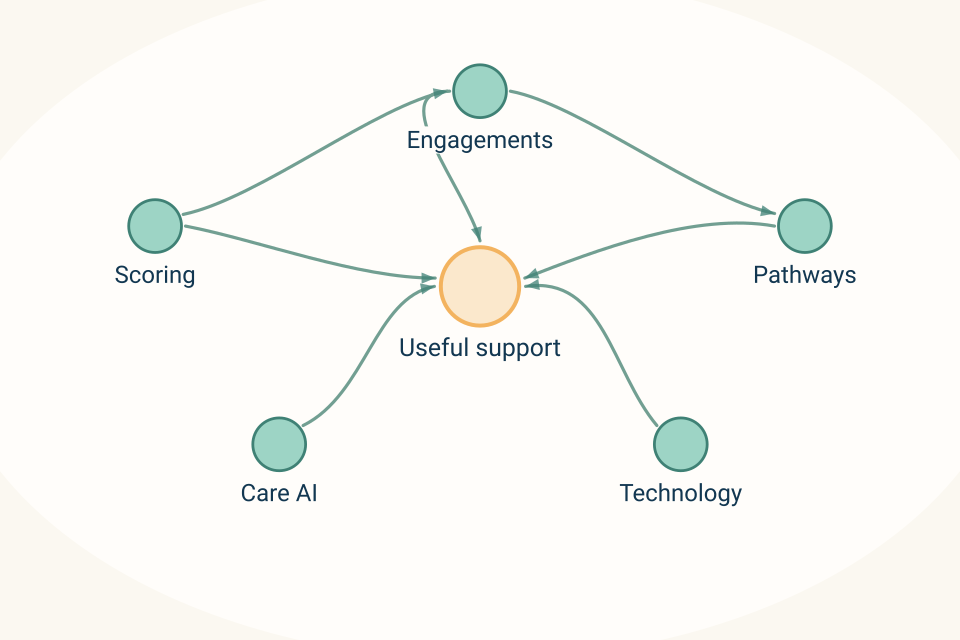
Engagements asks what makes each encounter worthwhile. Pathways connects encounters through time and responsibility. Technology examines whether people can reach and use the support. Care AI assists preparation with reviewed knowledge and responsible oversight. Scoring examines what helped, what was difficult and what should change. Useful engagements become parts of an adaptable pathway. Learning from the experience informs revisions to engagements. These are Principles 6–10; they do not require introducing more technology.
The first five principles asked us to understand the people involved: what matters to them, what they need to understand, what makes action possible, how they communicate, and where they can find support and belonging.
Now we turn to the experiences those people actually encounter.
An invitation arrives. A family watches a video. A staff member prepares a conversation. Someone opens a survey, asks a question, or tries an activity with a person they love.
Each encounter is a place where the organization’s intentions become visible—or fail to.
We may say that choice matters while providing only one way to participate. We may promise support while leaving a question unanswered. We may understand that a caregiver is exhausted, then send another lengthy guide without explaining which part could help today.
The next five principles turn the human foundations into practical design: encounters people can use, pathways that connect, accessible tools, responsible assistance, and a way to learn.
Engagements asks what makes an individual interaction worthwhile. Pathways connects those interactions through time, responsibility, and changing circumstances. Technology examines whether people can reach and use the support. Care AI considers how reviewed knowledge and appropriate assistance can help people prepare, explain, adapt, and decide. Scoring asks what helped, what created difficulty, and what should change.
These are not five reasons to introduce more technology. They are five ways to examine whether the support works.
The practical choices will differ. A hospital preparing someone for a procedure, a Day Center planning an activity, and a community organization welcoming a new family need different content, skills, and resources. They can still share a commitment to understandable information, meaningful choice, accessible design, and dependable human help.
AI can assist with the preparation: locating relevant guidance, organizing ideas, drafting alternatives, and helping a team refine its work. People remain responsible for what they offer and what happens afterward.
We begin with an ordinary evening.
A grandfather, his grandchildren, a story, and a screen.
The design question is not how to keep them watching.
It is how to help them enjoy being together.