About Genus and This Book
Protecting the purpose as the technology evolves
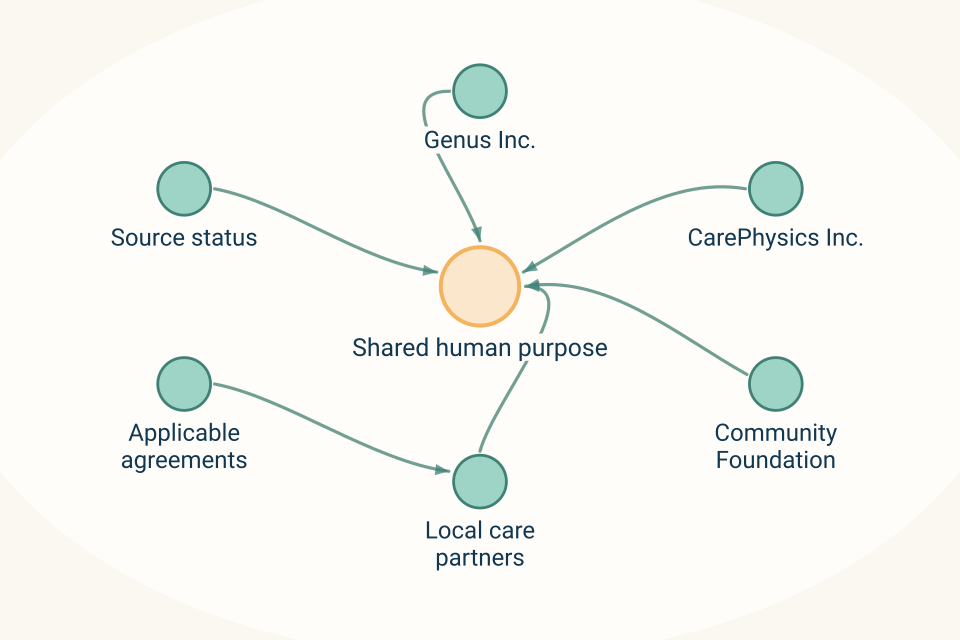
In the company account reproduced by this edition, Genus Inc. builds, operates and licenses the platform in service of the shared purpose. That account assigns engagement methodology and training stewardship to CarePhysics Inc. That account describes the Genus Community Foundation as stewarding mission, trust and community participation. Local partners retain responsibility for care, staffing, clinical judgment and services. Applicable governance, licensing and service agreements define the actual commitments to a partner. Source status keeps origin stories, fictional examples, research, proposed applications and dated implementation records distinct. This depicts the book’s dated company account, not a legal opinion, current capability verification or independent governance assurance.
CarePhysics grew from a family’s experience and from the knowledge of many people receiving, providing, and improving care. Genus is one place where we put that learning to work. The ideas in this book can also inform an organization’s own methods and tools.
Genus’s public company account describes complementary roles: Genus Inc. builds, operates, and licenses the platform; CarePhysics Inc. stewards the engagement methodology and training; and the Genus Community Foundation, styled genusCommunity Foundation in that account, stewards mission, trust, and community participation. These are the organization’s descriptions of its roles, not a legal opinion or an independent assurance of governance.102
The stewardship model described for this book makes room for sustainable commercial development alongside a nonprofit mission. Genus and commercial partners may license and adapt versions of the technology under their applicable agreements. A mission-driven Foundation version is intended to remain a continuing point of reference for the purpose that brought the work together.
The intention is to let different applications develop without allowing the shared human purpose to depend only on one commercial offering. For a partner, that means understanding which version is being adopted, who is responsible for it, and what actual commitments support its use over time.
Rights to use or modify software, receive support, and continue using a version come from the applicable governance, licensing, and service agreements. This book does not create those rights. Nor does Foundation stewardship transfer a partner’s responsibility for care, staffing, clinical judgment, or local services.
We want the technology to evolve without losing the reason it exists.
How the sources are used
The author’s family account explains the origin of the work. Pat and Ellen’s fictional story illustrates decisions. Published research and professional guidance inform the framework; proposed applications remain the author’s synthesis. Dated Genus records describe an implementation at a particular time and are kept in Appendix J rather than treated as independent evidence of effectiveness.
This revised edition consolidates the manuscript and repairs its source references. Targeted primary-source and bibliographic checks were made for the identified research corrections, including the behavioral foundations, caregiver support, the 4Ms, Theory of Constraints, and selected communication and AI studies. This was not a new systematic review of every subject in the book. R1 explains the evidence categories and the scope of those checks.
Purpose belongs in the way the work is governed, described, and improved. The continuing invitation is to contribute useful knowledge while preserving the people, context, and responsibility behind it.
Notes
Genus (2026). The people and purpose behind Genus. Company overview, including the organization’s account of Genus Inc., CarePhysics Inc., and genusCommunity Foundation. Accessed October 1, 2026. Source (opens a new tab)