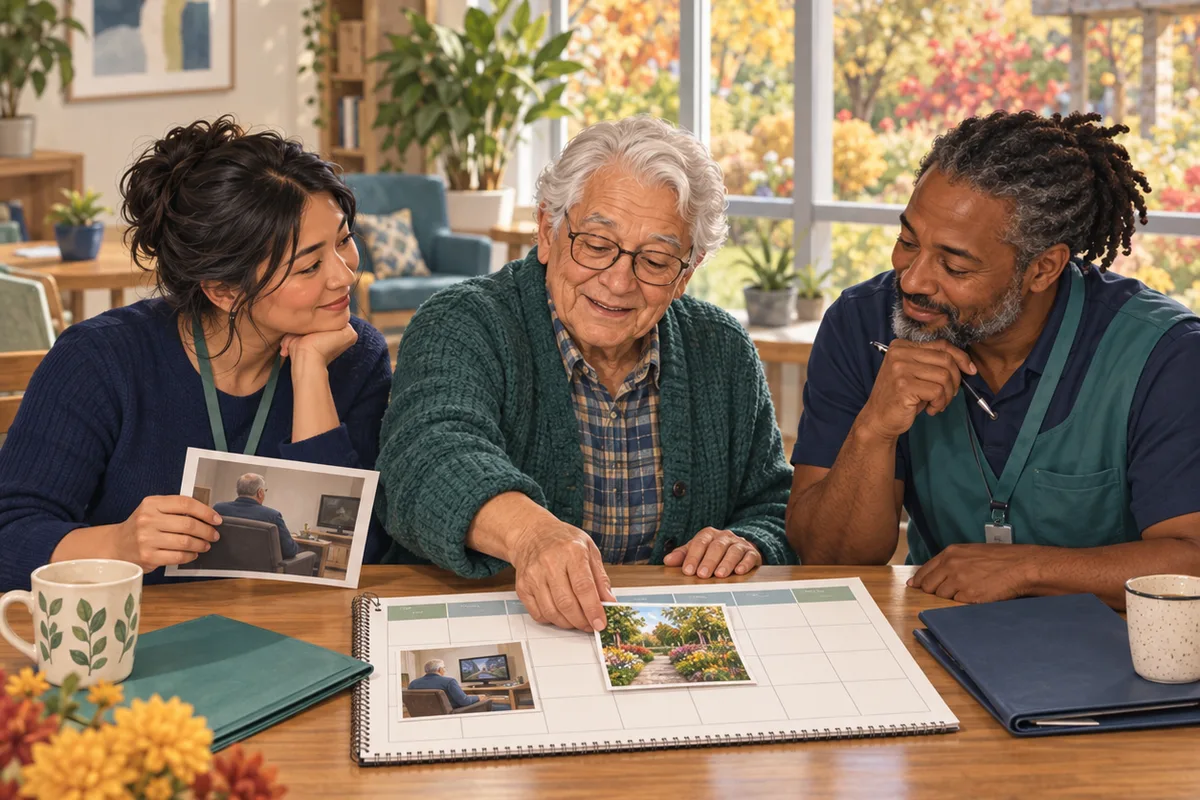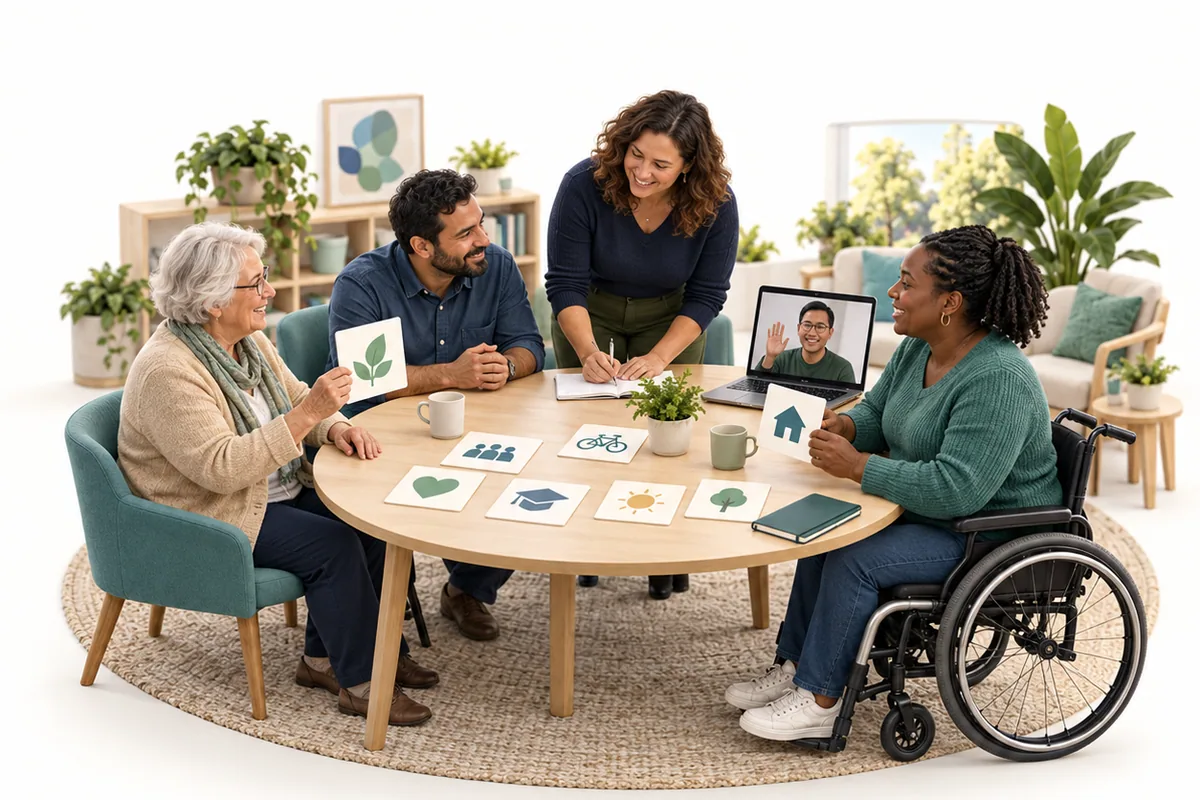
An illustration should help explain, without pretending
Generated illustrations can explain possibilities without posing as evidence. A NIST report prompts practical questions about image purpose, captions, participant agency and social versions.
Observations. Evidence. Ideas.
News, observations, and practical ideas for people who support care. Explore what is changing and what it means for your community.
Explore the research behind our workStart with a topic or a few words, or leave search blank to browse.
Search looks through titles, summaries, authors, and article text. With several words, each word must appear somewhere in the article.
Choose a theme to see its articles straight away. Your applied search and filters stay in place. Choose All themes to explore across themes.
For a closer match, open More filters and choose a setting, reader role, or article type, then select Apply filters. You can also enter words and choose Find articles. Results must match every option you choose. Leave an option set to All to keep that part open.
An article can belong to more than one theme. Explore what each covers and why we write about it.
Find articles relevant to a community, care setting, or organization. These options include people and partners as well as places:
Choose a perspective that interests you. You can read from any role:
No matches? Try fewer words or remove a filter. Clear filters clears your search and all selected options.
150 articles · Page 1 of 13
Generated illustrations can explain possibilities without posing as evidence. A NIST report prompts practical questions about image purpose, captions, participant agency and social versions.
A planned tool closure can interrupt a familiar activity. Microsoft's earlier Skype announcement prompts a practical look at choosing alternatives, rehearsing the change and keeping contact arrangements clear.
Usage counts tell part of a service story. A WHO monitoring framework prompts us to pair clear definitions with people's accounts, notice missing perspectives and choose a useful next change.
A new process needs time, attention, and a reason people recognize. Invite those doing and receiving the work to shape a small trial, and make room to learn before expanding it.
A shared care plan needs opportunities to change with the person. WHO’s integrated-care guidance prompts a practical team question: which goals, arrangements, and supports still fit everyday life?
A federal call for caregiving advisory-council nominations invites a wider question: how do organizations help people contribute meaningfully to decisions about the support they receive and provide?
New forms, changing content, and routine updates can introduce fresh barriers. Give accessibility an ongoing place in service ownership, staff support, and the response to user feedback.
Recognition for an aging-services program can point others toward useful practice. The next step is to understand the people, expertise, and local arrangements behind it before deciding what might travel.
After an unplanned hospital stay, familiar arrangements may need checking again. A thoughtful follow-up can connect the person’s questions with the services, appointments, and practical support they now need.
A coach-supported digital prototype highlights a practical service question: what help is available after onboarding? Plan clear contact arrangements, realistic staff time and ways to learn from recurring questions.
New federal nutrition-program awards emphasized testing and documenting approaches. A useful pilot should explain what was tried, what people experienced, and what another community would need to adapt it.
A working connection still needs shared meaning. WHO and ITU's draft infrastructure guidance prompts practical questions about records, responsibility and the next step across service partners.