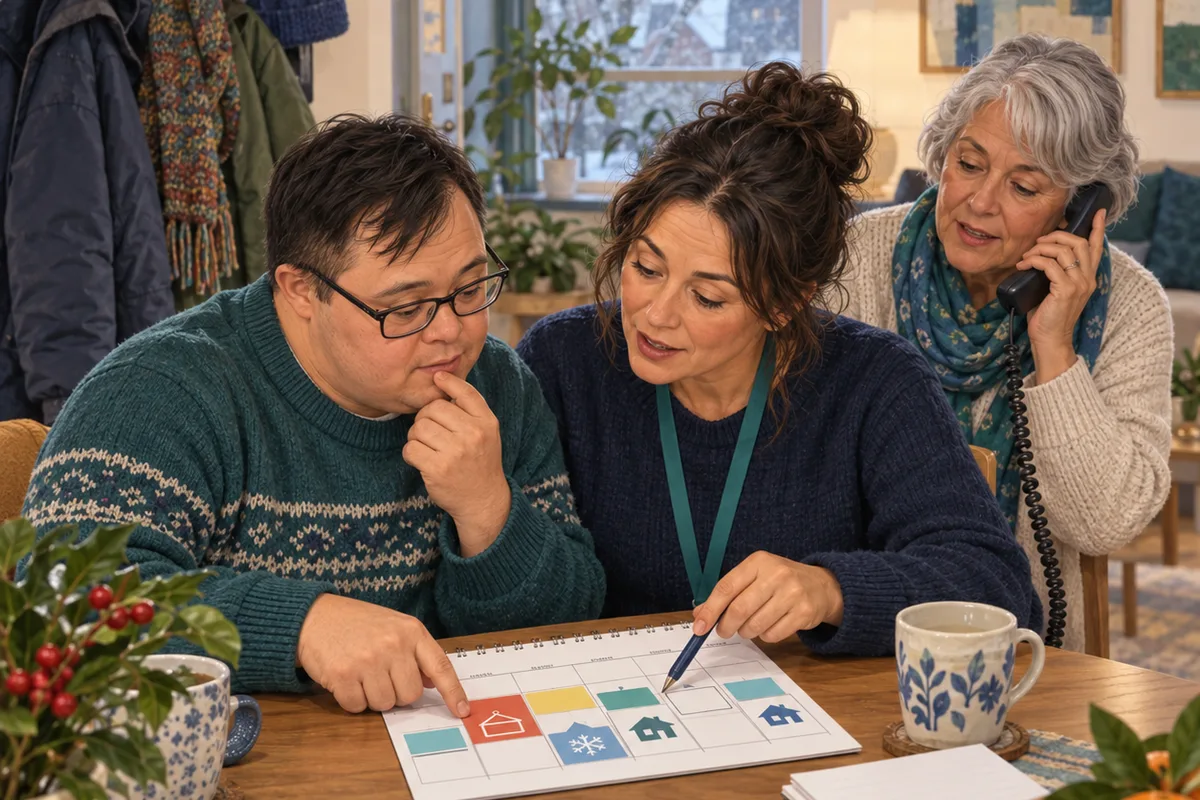
Purpose can begin with one small commitment
A sense of purpose need not begin with a large resolution. We consider one chosen commitment, enough room for changing circumstances and a community where belonging is never earned through productivity.
Observations. Evidence. Ideas.
News, observations, and practical ideas for people who support care. Explore what is changing and what it means for your community.
Explore the research behind our workStart with a topic or a few words, or leave search blank to browse.
Search looks through titles, summaries, authors, and article text. With several words, each word must appear somewhere in the article.
Choose a theme to see its articles straight away. Your applied search and filters stay in place. Choose All themes to explore across themes.
For a closer match, open More filters and choose a setting, reader role, or article type, then select Apply filters. You can also enter words and choose Find articles. Results must match every option you choose. Leave an option set to All to keep that part open.
An article can belong to more than one theme. Explore what each covers and why we write about it.
Find articles relevant to a community, care setting, or organization. These options include people and partners as well as places:
Choose a perspective that interests you. You can read from any role:
No matches? Try fewer words or remove a filter. Clear filters clears your search and all selected options.
102 articles · Page 6 of 9
A sense of purpose need not begin with a large resolution. We consider one chosen commitment, enough room for changing circumstances and a community where belonging is never earned through productivity.
Holiday opening hours and winter pressure can alter an otherwise familiar care arrangement. NHS England’s September 2024 winter priorities prompt a local team question: do people know what is confirmed, what changes and whom to contact during the gap?
NIA’s July 2024 grief guidance recognizes that people mourn differently. Our perspective: holiday connection can include a changed plan, a memory shared by choice and permission to participate in a way that feels manageable.
Not every helpful act comes with a volunteer badge. New civic-life findings prompt a reflection on specific offers, comfortable boundaries and the ordinary help neighbors can choose to share.
Being told about a care task is different from feeling prepared to help with it. NICE transition guidance prompts teams to check what chosen supporters have agreed to do, what training they need and where they can return with a question.
NIA’s guidance asks families to consider skills, changing availability and personal limits. Our perspective: a fair conversation starts with what each sibling can reliably offer and what the person receiving support actually wants.
For a person living with dementia, a change of setting should not erase the everyday details that help staff understand them. NICE guidance prompts teams to carry relevant preferences and familiar routines into the next care conversation.
AHRQ’s April 2024 review examines structured communication with family caregivers during care transitions. Our perspective: families need a chance to ask, understand and clarify what comes next, alongside a realistic account of the evidence.
An activity starts with the journey to it. Transport research prompts a practical look at fares, arrival points, return trips and the details that help people decide whether they can join.
When someone moves between services, a question about a changed medicine needs a responsible professional and a clear route to an answer. WHO’s transition-safety work prompts teams to separate recording a question from resolving it.
Research on arts and crafts prompts an invitation to make something without a performance to deliver. We explore materials, choice and the enjoyable conversation that may happen along the way.
The Surgeon General’s 2024 advisory asked families and communities to support parents. Our takeaway: a useful offer names a task, a time and someone who will follow through.