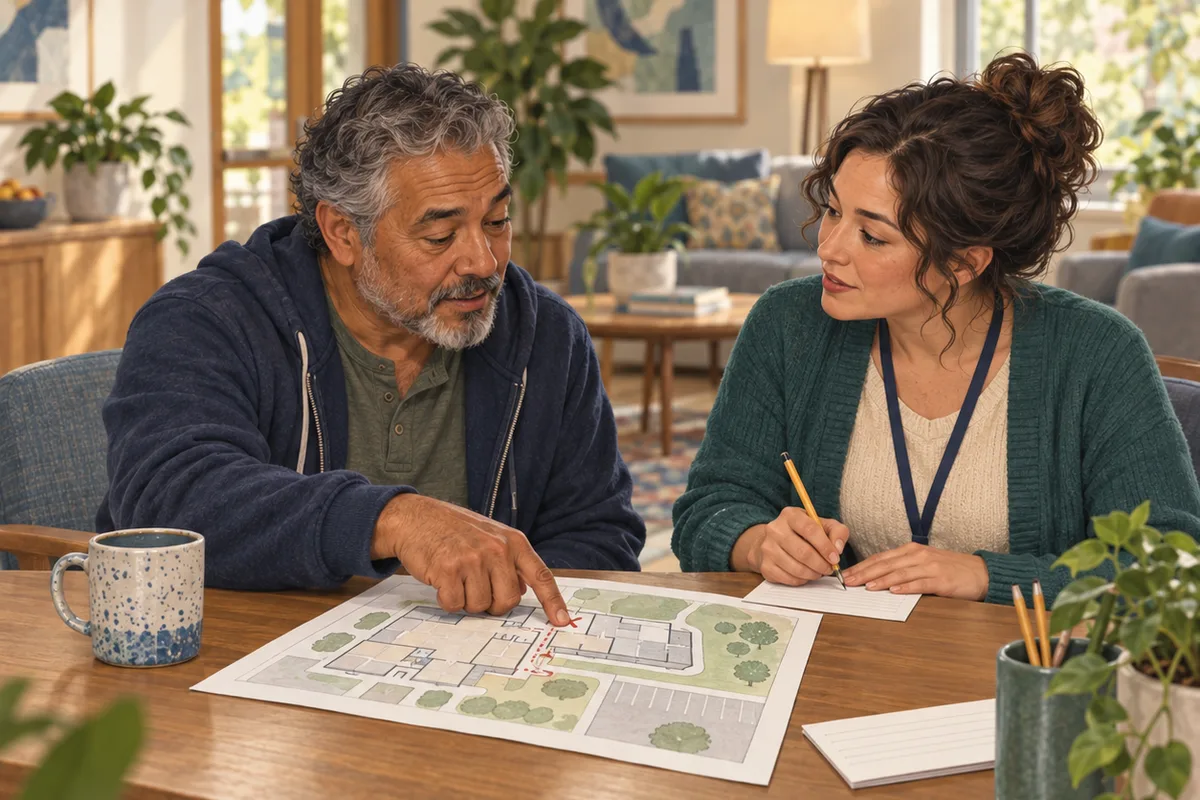
What does it take to get through the door?
Low digital participation can hide practical obstacles. A WHO review prompts us to look at the whole route into a service, including cost, language, connectivity and human help.
Observations. Evidence. Ideas.
News, observations, and practical ideas for people who support care. Explore what is changing and what it means for your community.
Explore the research behind our workStart with a topic or a few words, or leave search blank to browse.
Search looks through titles, summaries, authors, and article text. With several words, each word must appear somewhere in the article.
Choose a theme to see its articles straight away. Your applied search and filters stay in place. Choose All themes to explore across themes.
For a closer match, open More filters and choose a setting, reader role, or article type, then select Apply filters. You can also enter words and choose Find articles. Results must match every option you choose. Leave an option set to All to keep that part open.
An article can belong to more than one theme. Explore what each covers and why we write about it.
Find articles relevant to a community, care setting, or organization. These options include people and partners as well as places:
Choose a perspective that interests you. You can read from any role:
No matches? Try fewer words or remove a filter. Clear filters clears your search and all selected options.
188 articles · Page 4 of 16
Low digital participation can hide practical obstacles. A WHO review prompts us to look at the whole route into a service, including cost, language, connectivity and human help.
A named coordinator can make a complex plan easier to navigate when people understand the role and how to reach it. NICE guidance prompts teams to pair the contact name with clear responsibilities, availability and a route for unresolved needs.
CMS’s planned ACCESS model links technology-supported chronic care with clinical accountability. It prompts a practical question: who is responsible for the whole service around the tool?
When an assistant can act, a clear suggestion is not enough. NIST’s draft concept prompts questions about identity, permission, a reviewable proposed change, and responsibility afterward.
A recipe can be an invitation to share something of yourself—or simply something you enjoy eating. We explore community food activities shaped by participants’ choices, with cultural sharing always voluntary.
A technology outage quickly becomes an operational problem. Agree who makes service decisions, who contacts people, and how the team returns to its normal work after an interruption.
A completed handoff does not tell a team how the transition felt or worked in practice. AHRQ’s feedback guidance prompts services to ask specific questions, offer different ways to respond and show what they learn from the answers.
A polished demonstration can leave everyday barriers unseen. Put real tasks, accessibility evidence, and the support people need into the conversation before choosing a digital tool.
Company does not always need a lively conversation. We reflect on quieter ways to share a place, with room to read, make, watch or simply be present alongside other people.
Usable does not always mean enjoyable. A small co-design study prompts a community activity conversation about personal interests, pace, company, and the freedom to stop.
A federal update on substance-use treatment records brings a wider service question into focus: can a person understand what information they are agreeing to share, and who can explain the choice?
Federal rural-health awards create room for state-led change. For a resident looking for help, the useful question is what is available nearby, who it serves, and how to begin.